Categories
Archives
Receive Email Updates
-
-
-
Certified Licensing Professionals, Inc., 2021 
Disclaimer
This blog, Patents4Life, does not contain legal advice and is for informational purposes only. Its publication does not create an attorney-client relationship nor is it a solicitation for business. This is the personal blog of Warren Woessner and does not reflect the views of Schwegman Lundberg & Woessner, or any of its attorneys or staff. To the best of his ability, the Author provides current and accurate information at the time of each post, however, readers should check for current information and accuracy.
-
- About Me
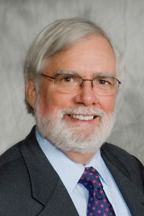
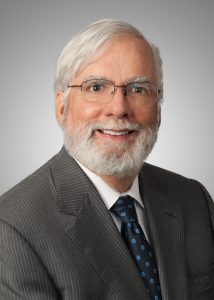
Warren D. Woessner
Pages
Archives
Monthly Archives: June 2010
ISC Patent On Making Human Stem Cells Advances Cloning Technology
sale viagra without prescription Apart from being praised as an ethical work-around to the problems of destroying early-stage human embryos—often about to be discarded as surplusage by fertility clinics — to obtain human pluripotent stem cells, Revazova et al. … Continue reading
DNA As Information. “Synthetic Genome” Paper Brings New Life To Old Debate
In the landmark paper by Gibson, Smith, Venter et al, Science Express (May 20, 2010), reporting the successful replacement of one bacterial genome by a completely synthetic, functional chromosome, the authors note: “This work provides a proof of principle for … Continue reading
VENTER GROUP LABELS SYNTHETIC LIFE “PAT. PENDING”
In the May 20th issue of Science Express, a group led by Daniel Gibson, Hamilton Smith and J. Craig Venter published an article that got the full attention of scientists, bioethicists and IP attorneys worldwide: “Creation of a Bacterial Cell … Continue reading
Posted in Stem Cells/Cloning
Tagged biotechnology, intellectual property, Warren Woessner
Leave a comment
Patents4Life Makes The BioBlogging Project’s Top 50
Though we are only about 14 months old, I was pleased to see patents4life get a spot as a top biotech blog (and no, we didn’t “sponsor” this list). While the BioBlogging Project is oddly bio-skeptical, the link will lead … Continue reading