 At the end of the Supreme Court’s Opinion, Justice Thomas makes it clear that the Court was impressed by Judge Byson’s dissents in the Fed. Cir. Myriad opinions. Although Judge Bryson was on the Intema panel that sank claims to pre-natal screening for Down’s syndrome, the Supreme Court’s opinion makes his position in Myriad sound like a progressive one that will lead the way to patent-eligible claims:
“Similarly, this case does not involve patents on new applications of knowledge about the BRCA1 and BRCA2 genes. Judge Bryson aptly noted that ‘[a]s the first party with knowledge of the [BRCA1 and BRCA2] sequences, Myriad was in an excellent position to claim applications of that knowledge. Many of its unchallenged claims are limited to such applications.’ 689 F.3d at 1349.”
Well, to what applications is Justice Thomas referring? Remember, Judge Bryson had no problem with Judge Lourie’s nearly summary disposal of the method claims that were on appeal. Also, in Intema, a panel that included Judge Bryson wrote: “The stricken [process] claims [in Myriad] are indistinguishable from those before us [in Intema]…The claims were not over an application of the mental process of comparing [a sequence in a tumor sample with one from a non-tumor sample]. ‘Rather, the step of comparing two DNA sequences [was] the entire process that [was] claimed. [citing to Myriad].’”
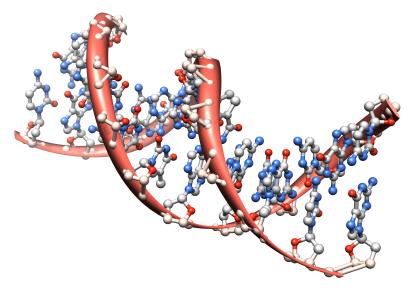
 Today, the Supreme Court ruled that a naturally occurring DNA sequence is a product of nature, and not patent-eligible simply because it has been “isolated.” (A copy of the ruling can be found at the end of this post.) However, the Court “split the baby” and held that cDNA is patent eligible, because it is not naturally-occurring, e.g, is sufficiently man-made. The core rationale was that Myriad did not create a composition of matter “with markedly different characteristics from anything found in nature,” taking language from what commentators consider dicta in Chakrabarty. In other words, genes, though they can be defined by their chemical structure, are not “new…composition(s) of matter” under s. 101.